Author: Ole Germann

  • Empire of Dirt: Electrical switches using nuts and bolts

    Empire of Dirt: Electrical switches using nuts and bolts

    About a decade ago, I had an idea for proposing to my then girlfriend, now wife. I wanted to make a physical game box with keys that unlocked different effects. I got as far as a prototype of the key system, and the parts have stayed in my empire of dirt with the other bits and bobs ever since.

    Screwing a bolt into place would bridge the intended electrical contacts and complete a circuit. I liked that the action itself could be part of the puzzle: find the right place, turn the bolt, and something happens.

    The keys were bolts. The locks were nuts with wires attached.

    The circuit idea

    The prototype used a 9 V supply. Several contact points connected in series can make the output depend on all of them being closed. Electrically, that gives an AND condition. The circuit can tell whether the path is complete; it has no memory of the order in which the bolts were inserted.

    All keys present, or keys in order?

    That distinction matters for the game. If the puzzle only requires several keys to be present, series contacts are enough. A puzzle that requires a particular sequence would need a mechanical way to enforce that sequence or some additional state, such as a small controller. I would decide which behaviour the game needs before adding parts.

    What I would check before putting it in a box

    The contact is the part I would spend time testing. A loose bolt can appear to be in place while making an intermittent connection. I would check continuity with a meter while turning and moving it, then repeat the test after mounting it in the material intended for the box. The wires also need strain relief so the player’s turning action does not pull on a solder joint.

    I would keep exposed metal contacts on a low-voltage battery circuit and insulate nearby conductors to prevent accidental shorts. If an effect needs more current than the contacts can reliably switch, I would use the contacts as an input to a suitable driver. The load determines the driver and protection needed; this photo is a prototype idea rather than a complete wiring guide.

    The next version could start with a single indicator and a few keys. Once that works repeatedly, I could connect the actual effect and see whether the puzzle is still enjoyable to use. A simple circuit leaves more time for the physical details: where the keys are hidden, how they feel and what the player discovers.

    I have kept the parts because I still like the idea. It is a small, tangible way to make a box react to someone opening it, and I would like to finish it eventually.
  • Black Box 2020 – 2024

    Black Box 2020 – 2024

    The Black Box project is a series of gift boxes I have made for birthdays and Christmas. It started with several small presents in one decorated box. Over time I added lights, sounds and things that moved when the lid opened. I have been better at making the boxes than documenting them, so this is a collection of the parts I can still show and explain.

    The first box was a moving box painted black and wrapped with gold paper. I numbered the flaps using red paper hearts and put matching numbers on the presents. That gave the recipient an order to follow. It also let me choose which present they would find last, without needing a complicated mechanism.

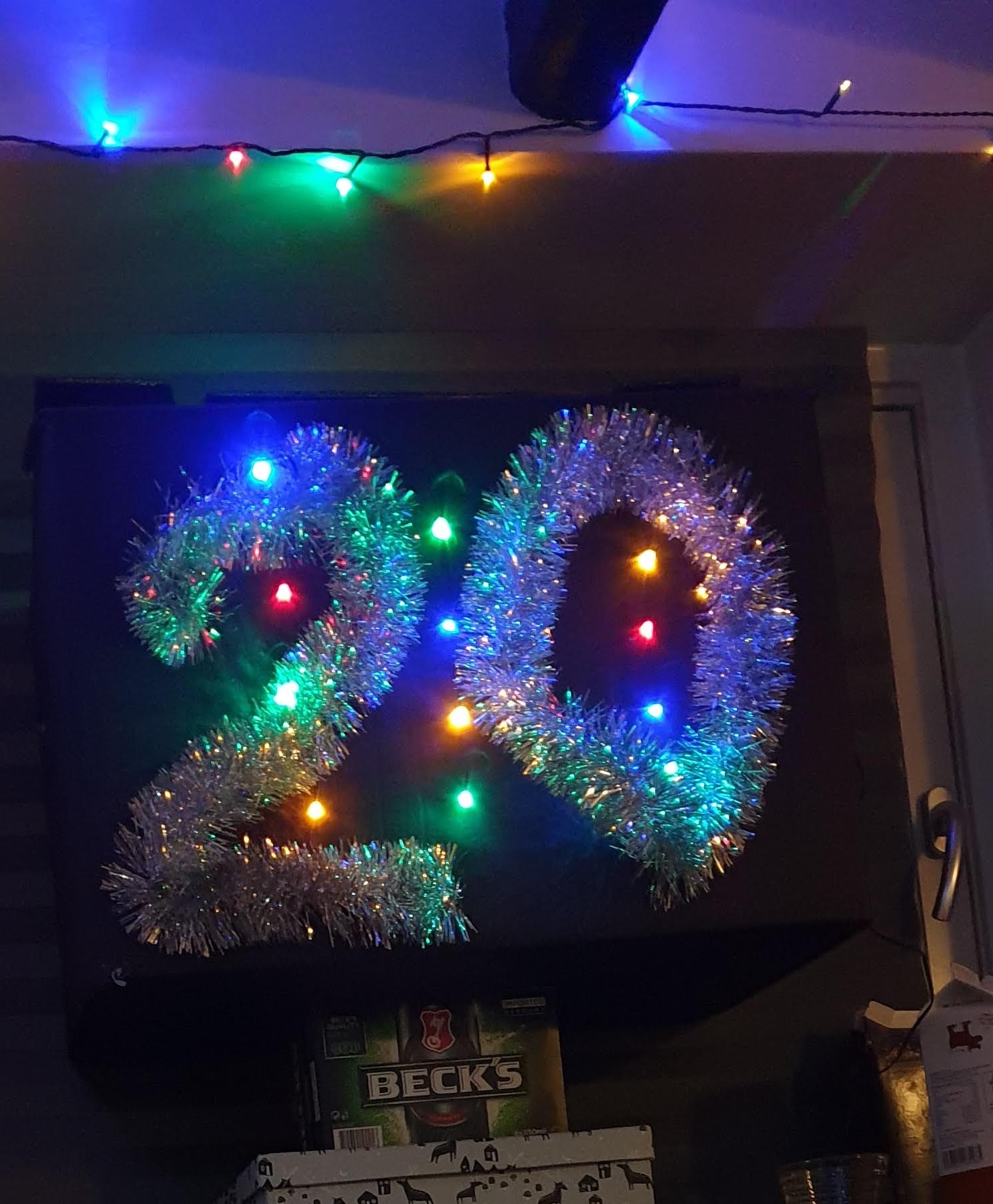
    2020: lights in the box

    For my girlfriend’s twentieth birthday, I added lighting. This version needed a nearby power outlet, so where I could put the box depended on where I could plug it in. That was manageable at home, but it became a detail I wanted to change for later boxes.

    I also moved from spray paint to black acrylic paint because I disliked the fumes from spraying. The box was still an ordinary cardboard construction. The decoration and the order of opening did most of the work; the lights added something to discover.

    2022: making it personal

    For Christmas 2022, I reused the lighting setup and arranged the lights to spell the recipient’s name. The power arrangement stayed the same. This was an iteration on a familiar box, with the time going into the presentation and placement of the lights.

    2023: the lid switches the lights on

    My daughter was born in September 2023, and I documented very little of the boxes that year. There is a video where they are briefly visible in the top-right corner. The useful mechanical change was moving to a battery-powered light chain.

    I placed a piece of plastic at a battery contact to keep the circuit open and tied it to the lid. Opening the lid pulled the plastic away, allowing the contact to close and the lights to turn on. It was a simple way to connect the opening action to the effect without programming anything.

    For another version, I would pay attention to the length and routing of that string. It needs enough travel to remove the tab completely, while staying out of the presents and the recipient’s hands. I would also make the tab easy to put back during testing. Otherwise every test means fiddling with the battery holder again.

    2024: eleven boxes

    In 2024 I made eleven boxes for the extended family. We would be gathering at a cabin, so the boxes had to be compact enough to move and able to work where they were placed. Making several also meant that a fiddly detail would have to be repeated eleven times.

    The boxes included sound modules with a recorded greeting from our daughter. I also experimented with eight autonomous helicopter toys per box, using string activation and custom mounts. Modified aluminium cans were part of the mounting experiment. Some of the triggering was flaky during testing, and the behaviour was less predictable than the lights.

    I would simplify that moving section before repeating the design. A future version needs to keep loose parts contained and make the effects easy to test separately. The greeting and lights already provide a clear opening moment. Moving toys add more things that can snag, shift during transport or need resetting.

    What I would carry into the next box

    For the next build

    I would build the effects on a removable insert so I could reach the batteries and wiring without taking apart the decoration. Each effect should be testable before the presents go in. Then I would close the finished box, carry it around and open it again to see what transport has disturbed.

    For a batch of boxes, I would write a small assembly note with the battery type, how to reset the trigger and a photograph of the finished internal arrangement. That would also leave me with better documentation for the next year. So much of the work here is remembering how I made the previous one behave.

    The part I keep returning to is the sequence of opening: a numbered flap, a light coming on, a familiar voice. I enjoy finding a small mechanism that makes that moment work. The next box can build on the parts that behaved reliably and give me one new thing to try.

  • Why WordPress?

    Why WordPress?

    I use WordPress because I want to spend the time I have for this site writing and putting projects online. Building a blogging system would be an interesting project of its own.

    I already have enough projects waiting for attention.

    At work I have built BizTalk custom components, APIs and a management portal. I enjoy that kind of development. For a personal blog, I want the ordinary publishing tasks to be readily available: drafts, revisions, image uploads, links and a way to correct a post without redeploying an application.

    What I would have to build myself

    The first version of a home-built blog could be very small. A few Markdown files and a static-site generator might be enough for text. As soon as I wanted an editing interface, media handling, previews and access control, I would have more code and deployment behaviour to maintain. Each addition would take time away from the posts the platform was supposed to hold.

    A static site would still be a sensible choice if I preferred editing everything in Git. For this site, the WordPress editor and media library suit how I publish. I can make a small correction through the browser and keep working on the article.

    There is still maintenance

    Using WordPress leaves me responsible for updates, account access, plugins and backups. The public articles do not contain much sensitive information, but the administration accounts and site configuration still matter. I would keep the plugin list short and remove software that no longer has a purpose.

    What the backup needs

    My recovery plan needs both the database and the files, including uploaded images and any theme changes. WordPress’s backup documentation explains the distinction. An export of posts is useful, but it is only part of restoring a whole installation. I would test a restore somewhere separate before relying on a backup.

    For a theme or plugin change, I would check the homepage, an ordinary post, a post with media and the mobile navigation. Those are the paths visitors actually use here. A successful update notification says less about the site than opening those pages and trying them.

    Keeping the choice proportionate

    WordPress has an established ecosystem, and I can usually find documentation for a problem without implementing a feature from scratch. I also like Ghost. I have not made a detailed feature comparison that would justify dismissing it for other people; WordPress simply fits this blog and the setup I am willing to maintain.

    I still appreciate very small tools. I reach for nano more often than Vim, and a heavy IDE can be frustrating when the task is a tiny edit. The same preference applies here: I want a publishing setup whose routine work stays small enough that I keep using it.

    If writing becomes harder because of the platform, I can revisit the choice. For now, the useful next task is usually finishing a post, checking its links and making sure the pictures load.